
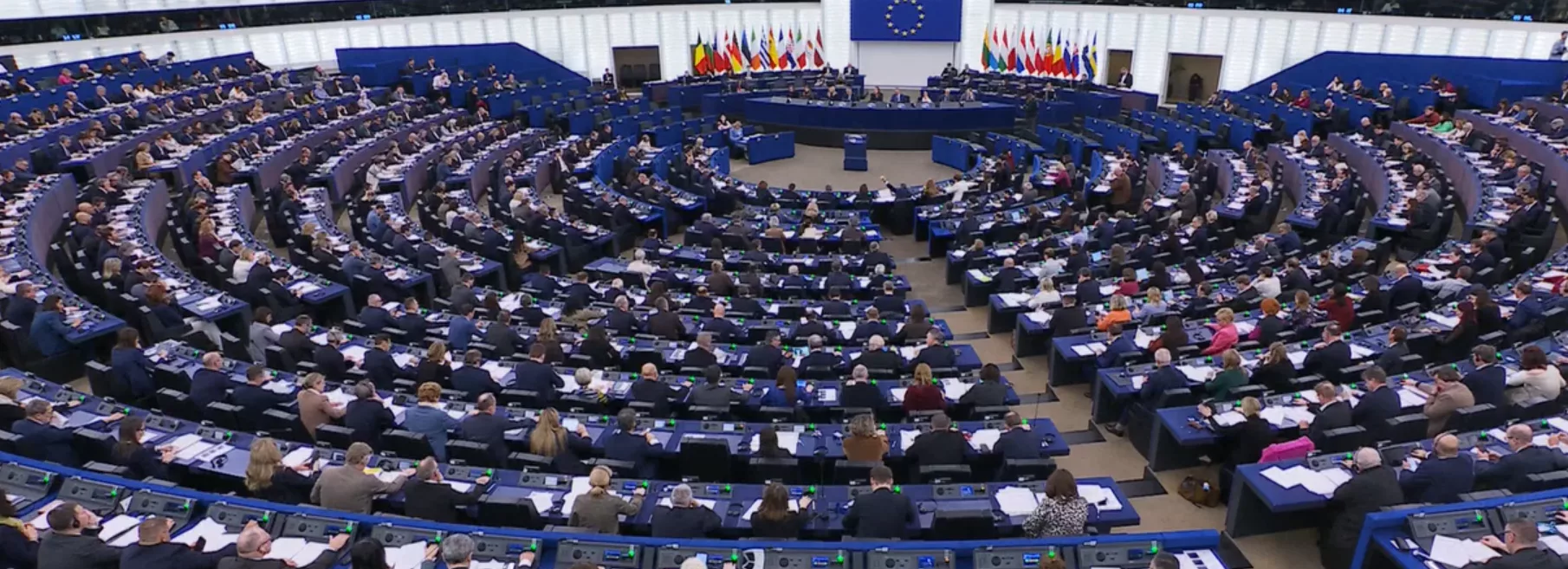
The European Parliament has voted to send the EU-Mercosur trade deal to court, potentially delaying the agreement by up to two years.
European Commission President Ursula von der Leyen only signed the agreement last weekend.
The deal promises to lower tariffs between the European Union and south American countries including Brazil and Argentina.
The Irish government objected to the deal fearing imports of beef and other agri products from south America will undermine farmers here.
The EU said that safeguard clauses and import limits would protect the European industry and that many sectors would benefit from the opening up of new markets.
Today, the European Parliament voted to refer the trade deal to the European Court of Justice to examine its legality.
Under the European Parliament’s Rules of Procedure, the vote on Parliament’s consent must be suspended until the Court of Justice of the European Union delivers its opinion, according to MEPs.
The Court may take up to two years to do so.
“This delay is essential to continue mobilising against the EU-Mercosur deal that undermines democratic process, European agriculture and European farmers”, MEPs from the political group, The Left, said.
The centre-right EPP group criticised the move as causing “unnecessary delays at a moment when Europe needs clarity and direction.”
It’s an embarrassment for von der Leyen who yesterday trumpeted the Mercosur deal in the face of Trump’s protectionism.
“This agreement sends a powerful message to the world. That we are choosing fair trade over tariffs. Partnership over isolation”, she said in a speech to the World Economic Forum in Davos.
Reacting to the European Parliament vote, the European Commission’s trade spokesperson, Olaf Gill said:
“The Commission strongly regrets the decision by the European Parliament to seek an opinion from the ECJ [European Court of Justice] on the compatibility of the [European Union – Mercosur Partnership Agreement] EMPA and [Interim Trade Agreement] ITA with the Treaties [of the European Union].
This comes at a time when EU producers and exporters urgently need access to new markets, and when the EU must deliver on its diversification agenda and demonstrate that it remains a reliable and predictable trade partner.
In the Commission’s firmly held view, the three questions raised in the European Parliament’s motion regarding the agreement are unjustified.
The Commission has already addressed these issues extensively with the European Parliament, noting that they are not new and have been dealt with in previous agreements.
The Commission will now engage with the Council and MEPs before deciding on next steps.”