
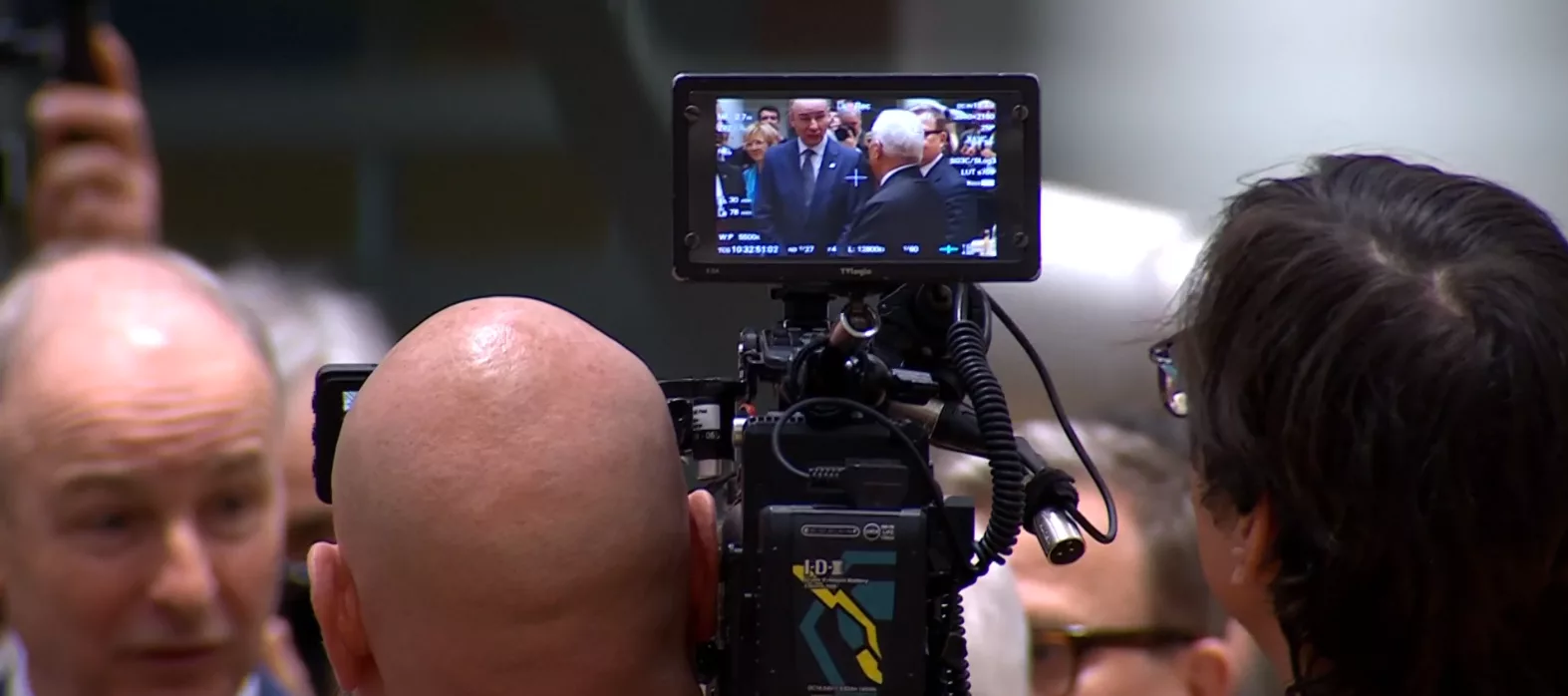
The government will provide short, medium and long term support from the effects of high energy prices, the Taoiseach promised.
Micheál Martin was speaking this morning as he arrived for an EU summit where energy prices and the war in the Middle East is top of the agenda.
In the Dáil last night, Tánaiste and Minister for Finance, Simon Harris TD said that the government was “finalising” a plan that would be signed off by the government next week.
This morning in Brussels Taoiseach Micheál Martin went further:
“We will look at the full gamut of areas where we can give some support to people”, he said.
“It is a very serious situation and we’re very conscious of the impacts this can have”, the Taoiseach said.
“Our immediate priority is to try and alleviate pressures on people on families in particular and then to make sure that we can do it in a way that doesn’t do any damage to the economy or doesn’t create any secondary effects in terms of inflation.”
Getting that balance right will be difficult particularly whilst the situation in Iran and the wider Middle East remains uncertain.
This morning, gas was trading at prices not seen since early 2023, although still way down from the outbreak of the Ukraine war the previous year.
“I think what’s important is to point out the volatility of all of this”, Micheál Martin said.
“We had significant escalation this morning in terms of gas prices because of further action in Qatar and elsewhere.
So we’re very conscious of the volatility of this. We will respond. There will be a short term dimension to it, medium term [and] we’ve got to look at the broader potential implications over the rest of the year.”
Other EU leaders arriving in Brussels also raised concerns about energy prices.
“We are very worried about the energy crisis”, said Belgian Prime Minister, Bart de Wever.
“We were already worried before the start of the war. Prices were too high and this war, of course, has created another spike in the prices and if that becomes structural, we’re in deep trouble.”
Luxembourg’s Prime Minister was more upbeat, however.
“We see already now an impact on the prices, but for now we still have the necessary reserves”, said Luc Frieden.
“It is also good that the summer is coming so Europe needs less energy right now than it would in the winter and we are prepared. “
“We have also drawn the lessons from the last crisis due to the Russian invasion of Ukraine so we know what to do if need be and I think we will protect our people…it is an important lesson to us to continue our production of renewable energy”, he added.
Oil and gas prices have been drive up by a blockade of the Strait of Hormuz by Iran. Normally a quarter of the world’s oil travels through the narrow sea there.
The EU’s foreign affairs chief, Kaja Kallas, said she was in talks with the UN to explore ways to reopen the Strait.
“We have United Nations here today, and we are also working closely with them to find a safe passage for the ships via the Strait of Hormuz, because it is really a problem.”
Israel’s bombing of a major Iranian gas field, and Iran’s attack on a gas plant in Qatar has also exacerbated the situation.