
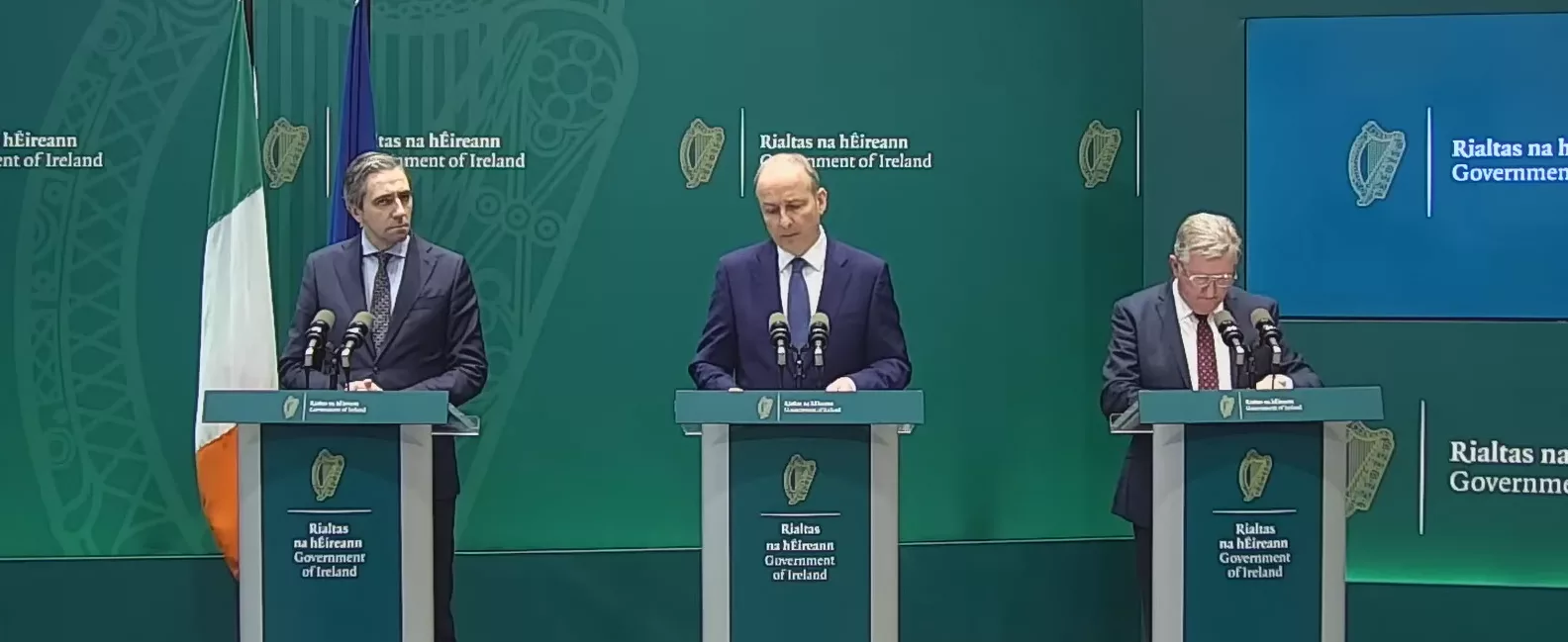
The Taoiseach has announced new and extended measures to help households and businesses cope with a surge in fuel prices after a week of protests.
The new measures includes help for farmers and the fishing industry, which, despite lobbying, were not included in the €250 million package of fuel support announced last month.
It is understood the government’s support package will now cost closer to €500 million.
Despite efforts by Garda Síochána, backed by Defence Forces, to clear protests, some blockades are still in place today.
Transport for Ireland said this morning that that “while most public transport services are operating normally, some disruption continues to affect services across the TFI network.”
Speaking at a press conference on Sunday, Taoiseach Micheál Martin said:
“Over the past six weeks the world has been coping with a dramatic and unexpected increase in oil prices as well as oil shortages.
The impact of this has been felt here in Ireland just as it has in most other countries.
The scale and nature of these increases have not been determined by government, but we have taken real and substantive action to try to limit their impact.
From the first days of the conflict, we have been actively monitoring the situation, holding discussions with representative bodies and examining ways of getting our country through this challenging moment.
That is why, little more than three weeks after the increases began, we implemented a significant cut in excise duties – removing 22 cent per litre from the cost of diesel and 17 cent from the cost of petrol.
We also extended the fuel allowance for a further 4 weeks. These changes have already been worth €250 million to households and businesses.
But, as we said then, we have to continue to keep everything under review, we have sought to protect prices and energy supplies.
We have also continued to engage with groups about the practical impact of prices on vital sectors of the economy particularly haulage and food production.
I want to thank the representative bodies hauliers, farmers, fishers and contractors who have taken the time to constructively engage with us throughout the last six weeks.
They have been constructive, robust and comprehensive in these discussions – And we believe a significant package of measures has emerged.
In recent days, a coordinated effort to blockade our streets, our motorways, our fuel depots and ports has been implemented by groups with a self-declared mandate.
They have explicitly rejected the right of democratic representative groups to speak for them and have gone well beyond simply expressing their point.
As we said consistently during the week, nobody has a right to blockade our country.
In this free democracy there are many ways to make your point publicly, and our streets are regularly full of people exercising their rights.
But no self-appointed group has a right to prevent emergency services from operating normally, or delay people going for cancer treatment, or to threaten the jobs and livelihoods of others.
Nobody has a right to intimidate drivers attempting to distribute fuel or to talk about having control of the country and government.
No-one should deny the fundamental right of freedom of mobility, of people, goods or services.”
The high prices at petrol pumps are a result of President Trump’s war in Iran. Iran has blocked the key Strait of Hormuz through which a significant proportion of oil usually travels.
European Commission President, Ursula von der Leyen, said this lunchtime that the closure of the strait was “greatly damaging”.
In the past 44 days, Europe’s fuel bill had risen by €22 billion, she said.
Von der Leyen also raised concerns about Israel’s attacks on Lebanon.
“We call on all parties to respect the sovereignty of Lebanon and cease hostilities”, she said.