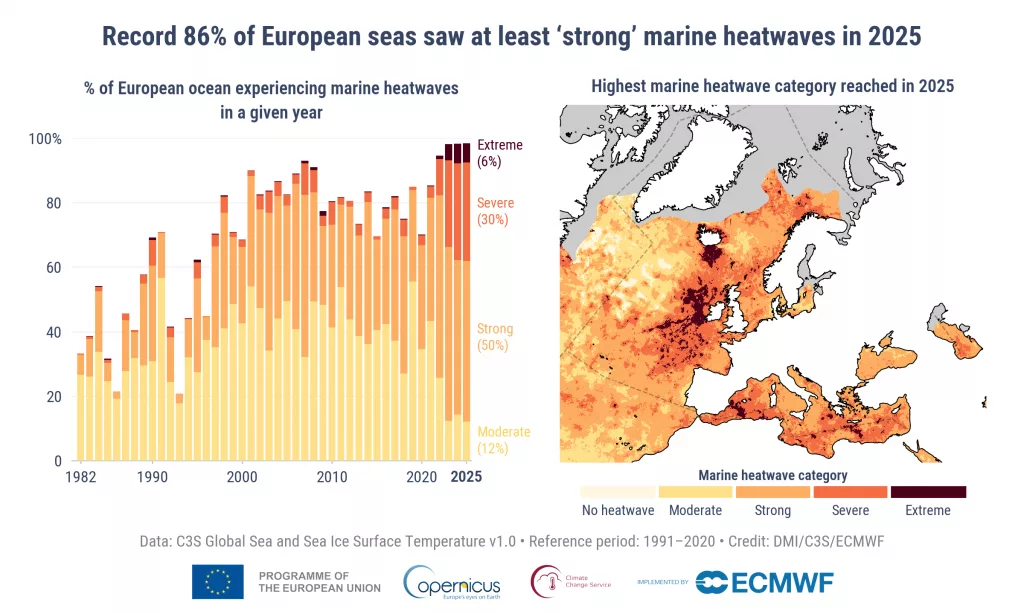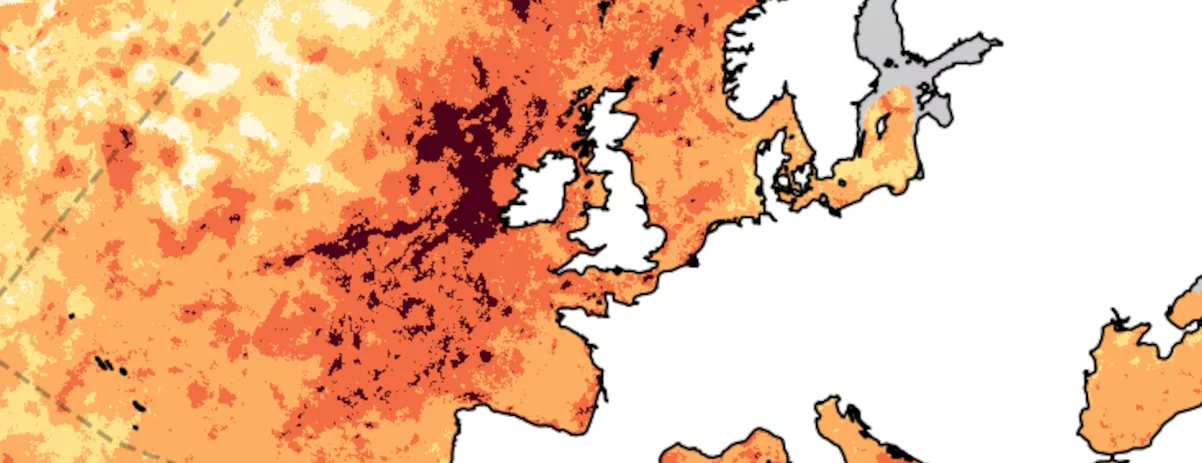
Extreme heat was repeatedly registered in the Atlantic ocean off the coast of Ireland last year, according to the EU’s climate service.
Parts of the ocean experienced their warmest temperatures on record, experts from the Copernicus Climate Change Service said.
The finding are highlighted in the European State of the Climate 2025 report published by Copernicus and the European Centre for Medium-Range Weather Forecasts today.
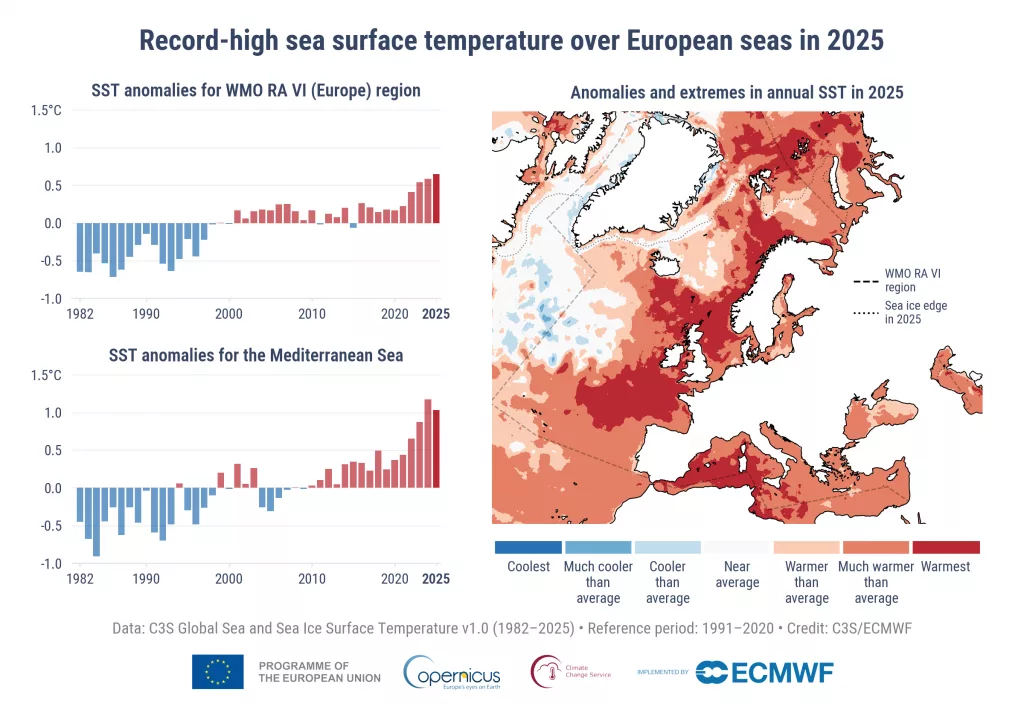
“The global ocean has absorbed about 90 percent of the excess heat caused by human-induced greenhouse gas emissions. In 2025, the European ocean region experienced its highest annual sea surface temperature on record, marking the fourth consecutive year of record warmth”, the report says.
“This long-term trend negatively affects biodiversity, species, and habitats. Marine heatwaves can also coincide with heatwaves over land – contributing to more extreme temperatures and humidity, including overnight, which can slow people’s recovery from heat stress and disrupt sleep.”
Marine heatwaves were widespread in 2025, affecting 86 percent of Europe’s ocean region, Copernicus warned.
“They were also more intense, with 36 percent of the region experiencing ‘severe’ or ‘extreme’ conditions – the highest proportion on record.”
Deputy Director of the Copernicus Climate Change Service (C3S), Dr Samantha Burgess, said:
“Almost the entire continent, at least 95 percent of the land area, saw above-average annual temperatures in 2025. Parts of northern and eastern Europe experienced their warmest year on record, including countries amongst the United Kingdom, Norway and Iceland, while Ireland, Sweden and Finland saw their second warmest year.
Sea surface temperatures also reached record highs in 2025, with the annual sea surface temperature for the European Ocean region being the highest on record for the fourth consecutive year.”
Dr Claire Scannell, Principal Meteorological Officer at Met Éireann said the finding are significant:
“Rising temperatures, changing precipitation patterns, and extreme events, such as we’ve seen in 2025, are disrupting natural habitats.
Marine environments are also under pressure as a result of warming and acidifying oceans. This decline of biodiversity weakens nature’s ability to both regulate the climate and adapt to climate change, creating a reinforcing cycle.
Addressing the challenges of climate change and biodiversity decline together is absolutely essential.
Protecting and restoring biodiversity in a climate-smart way offers an effective nature-based approach to mitigating and adapting to climate change, while at the same time safeguarding critical ecosystems.
This is reflected across Europe’s climate change and biodiversity policies and initiatives. For example, the European Green Deal sets out the basis for treating climate change and biodiversity as interconnected systems.”