
Europe’s economy is growing at a faster rate than previously thought, that’s according to the European Commission’s Autumn Forecast which has just been published.
But there are concerns about energy prices with oil prices still high and Europe’s gas storage at a record low.
The European Commission estimates that Ireland’s Modified Domestic Demand – a measure of the domestic economy when the impact of multinational companies has been removed – will cool slightly next year.
The EU’s GDP growth for this year is now estimated at 1.4 percent for this year and for next year, rising to 1.5 percent in 2028.
Measured by GDP, Ireland’s economy looks to be contracting dramatically, but the data is skewed by multinational pharmaceuticals that bulk-bought last year before Trump’s feared tariffs came into force. Cutting back this year looks like a contraction.
But using Modified Domestic Demand, the reduction in growth is only slight to the overall economy, which the EU says continues to perform well.
But for Ireland, and the wider EU, energy prices continues to be an issue.
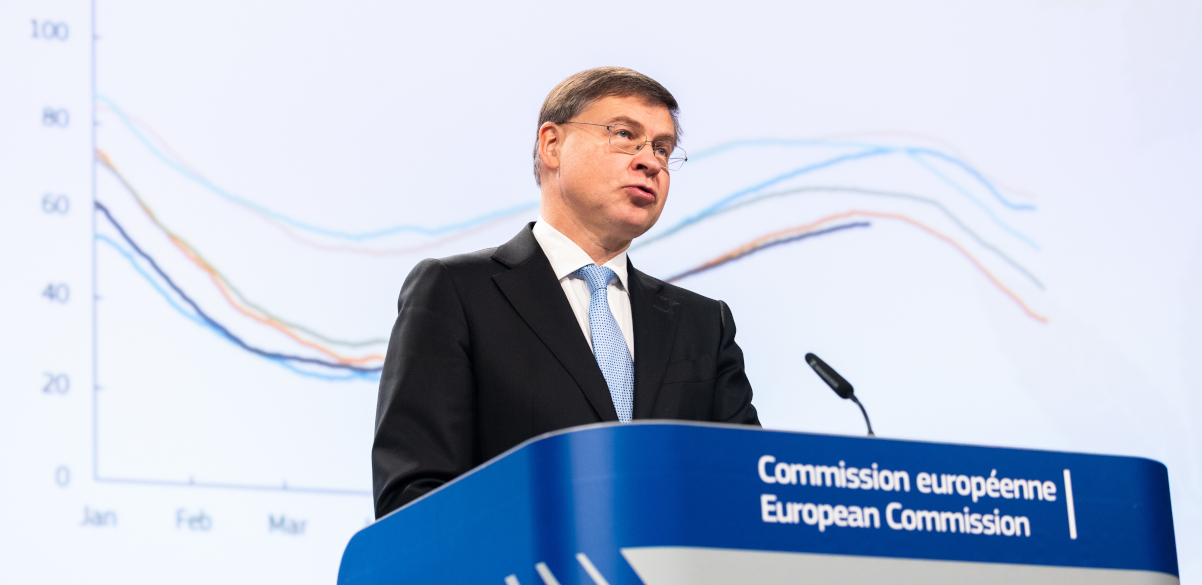
European Economy Commissioner, Valdis Dombrovskis, said that even if the Strait of Hormuz fully reopened today, oil prices would likely remain high because a lot of infrastructure in the Middle East has been damaged.
There are also concerns about gas supplies with gas stored in Europe at a record low.
Ireland does not store gas itself, but relies on imports. Less supply means higher prices for consumers and businesses, the Commissioner warned.