
Air pollution remains Europe’s largest environmental health risk despite a big fall in the number of deaths across Europe, the European Environment Agency (EEA) has warned.
A new analysis by the EEA shows that across Europe 182,000 died in 2023 as a result of exposure to dust, known as fine particulate matter or PMs. A further 34,000 died from exposure to nitrogen dioxide and 63,000 from exposure to ozone.
The staggering numbers are in spite of an improvement in air quality across much of Europe that has seen deaths fall by 57 percent compared to 2005.
According to the EEA, maritime transport is likely to become the main source of transport-related air pollution in coastal cities by 2030.
The agency is calling for better monitoring of ports and airports.
“Monitoring air quality in and around ports, airports and nearby cities will become more important in the coming decades. This will help assess the role of emissions from shipping and aviation as well as all related activities”, the EEA says.
“Some of the studied ports and airports may require enhanced monitoring networks as they could be considered air quality hotspots, while the surrounding areas may require measures to reduce air pollution as required by the revised air quality directive. “
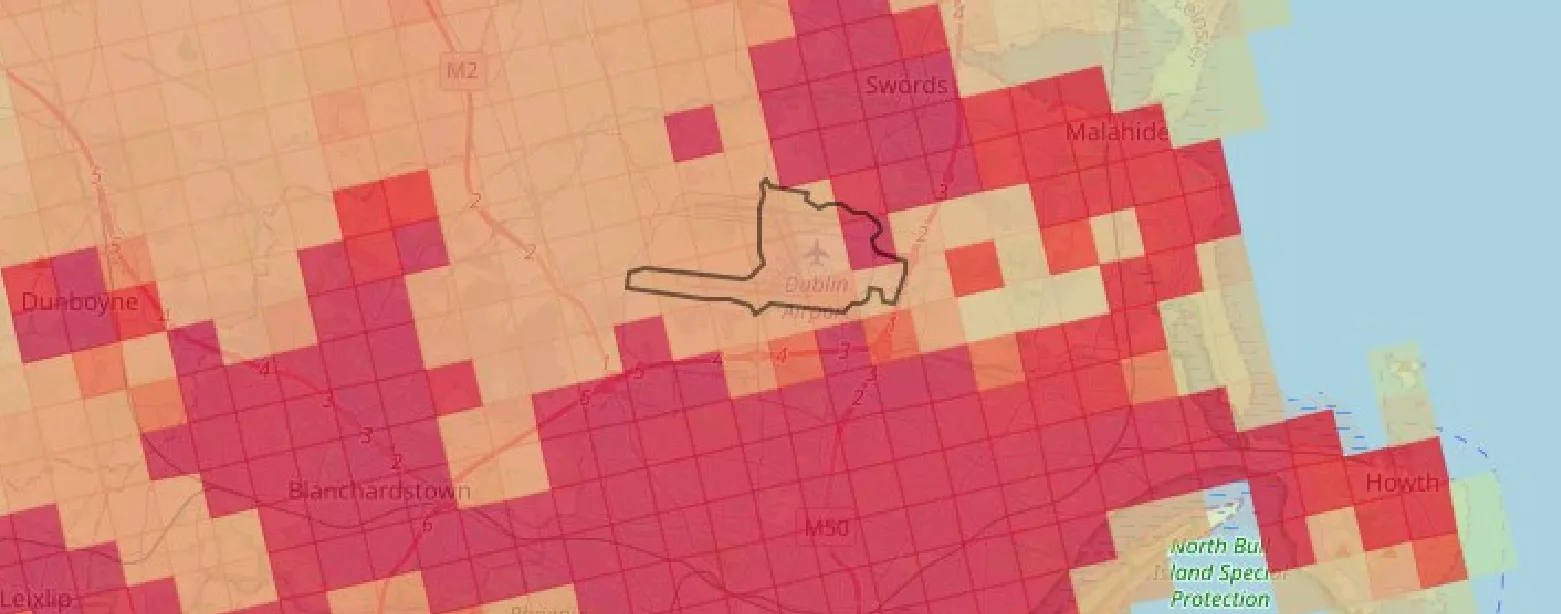
Air pollution in around Dublin Airport appears to be within EU limits, the report suggests.
Stricter EU limits for nitrogen dioxide and particulate matter pollution come into force in 2030.
The EEA warns that air pollution at the port of Piraeus near Athens, Napoli ports outside Naples and Milan Linate airport are currently “above the revised 2030 EU annual limit value”.