
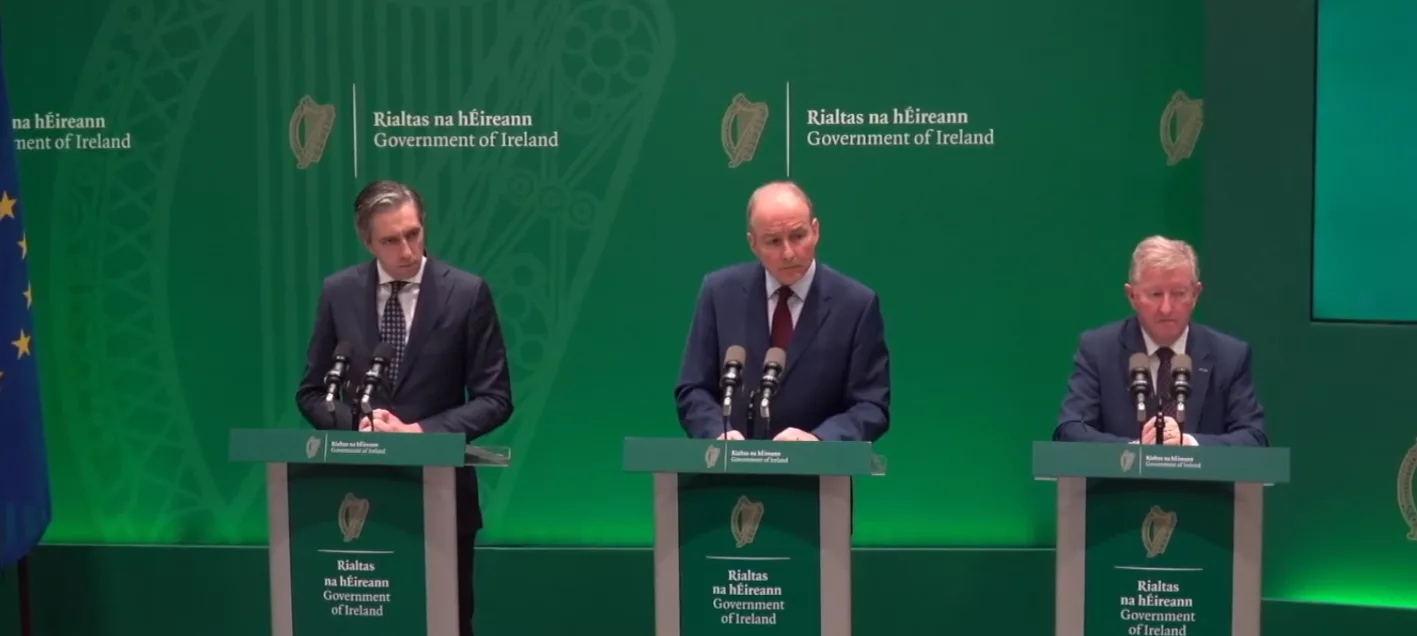
The Irish government will cut duty on petrol and diesel to try and help people cope with rising prices. There will also be more support for heating bills for low income families.
Together the package of measure will cost €250 million.
Tánaiste and Minister of Finance Simon Harris TD said the good state of public finances meant that the government could afford to splash the cash.
It comes as the war in the Middle East continues to disrupt shipping leading to rising prices.
Taoiseach Micheál Martin said the measures being taken by the government are a “targeted, temporary, affordable intervention aimed at protecting living standards and maintaining economic stability and competitiveness through temporary excise duty reductions, improvements to the diesel rebate scheme [and] helping a haulage sector that is critically important to the smooth running of our entire economy.”
The main measure will see a cut to excise duty on diesel by 20 cents and by 15 cents on petrol from Midnight tonight.
The reduction will be kept in place until the end of May.
The heating oil fuel allowance scheme for low income families will be extended by four weeks, the government confirmed.
And there will be support to hauliers and bus and coach companies with a higher rebate of 12 cents per litre backdated to January and extended until June.
For farmers, so-called green diesel will receive a cut in duty of 3 cents.
The Irish Farmers Association (IFA) President, Francie Gorman, called the cut “derisory” and said it will have “little or no impact at farm level”.
According to the IFA, prices of green diesel have increased by 50 percent in the past weeks and three cents only amounts to a reduction of around three percent.
Simon Harris hinted that the government could take further measures depending on whether the conflict in the Middle East drags on.
“I think the right thing to do for the people of this country is make sure we keep some of our powder dry for the time ahead because if we’re having a conversation about a prolonged conflict that runs through the winter period, certainly that is a very different set of circumstances.”
The Tánaiste says he has tasked his department with modelling different scenarios so that the government can be prepared for all eventualities.
Asked about the risk of fuelling inflation by pumping in public money, the Taoiseach said the government was taking action in line with European Central bank recommendations.
“The measures are targeted and temporary and affordable and all of the international advice to governments – be it the ECB or IMF – all of them create templates in terms of how to react to a crisis like this”, he said.
Last week Italy announced a cut in fuel duty of 20 cents until the end of March.
The French government said that fuel support measures would cost billions and are therefore unaffordable considering its budget deficit.