
The Irish government has raised concerns about the future of the Common Agricultural Policy following an announcement by the European Commission that it plans to merge it into other EU funding.
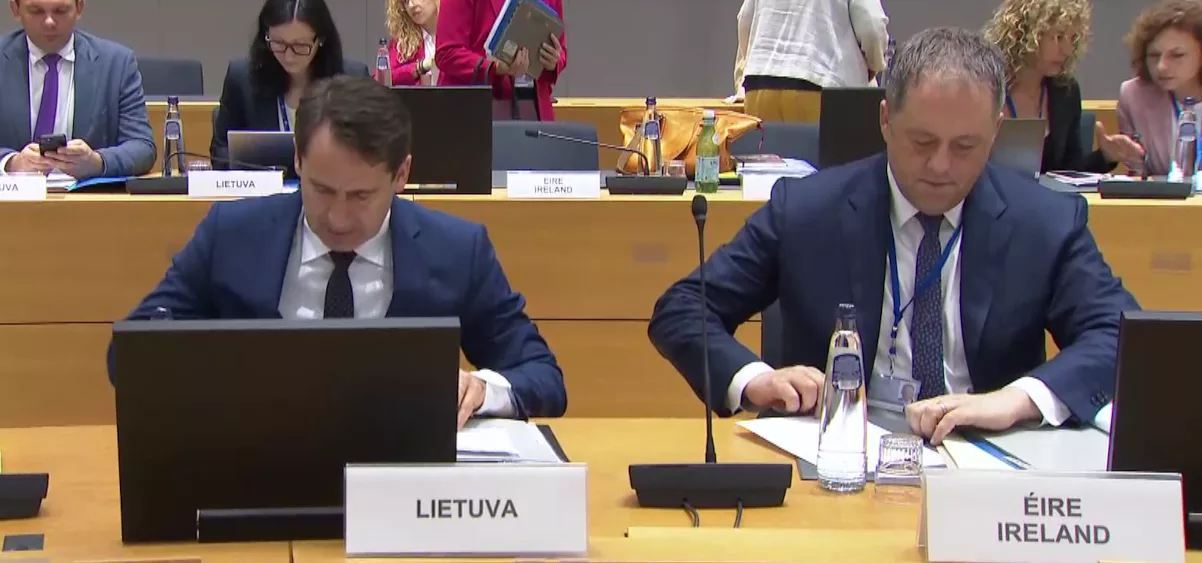
Europe ministers are meeting in Brussels today for a first discussion about the future EU budget (known as the MFF or Multiannual Financial Framework) following the publication of the European Commission’s proposals on Wednesday.
President von der Leyen has announced plans for €2 trillion EU budget to cover the period from 2028 to 2034.
Under her plans, the EU’s farming and fisheries budgets would be merged with other funding.
The Irish government has criticised the move saying “maintaining the Common Agricultural Policy (CAP) as a separate and strong policy” is a “key objective” for Ireland.
The government has also urged the EU to prioritise “utilising the Future Competitiveness Fund [funding for science and research] to catalyse critical enablers of competitiveness like energy, connectivity and digital, and sustaining the long-term development and humanitarian spending in the EU budget.”
But the European Commissioner for Agriculture, Christophe Hansen, has defended von der Leyen’s proposals.
“Overall the CAP budget for income support and crisis management amounts to at least €300 billion.
This ringfenced budget represents 80 percent of the current budget. Ringfenced budget means that it is protected only for the purpose of income support for the farmers and cannot be subject to flexibilities”, he told the European Parliament’s Agriculture Committee.
“This is important to ensure stability and predictability for farmers – a key demand of your Committee.”
Other types of rural funding would be available to farmers, but they will have to compete for the money along side fishermen and other sectors.
Speaking this morning ahead of the meeting of Europe ministers, Ireland’s Minister of State for European Affairs and Defence, Thomas Byrne TD said:
“Ireland wants to see a robust CAP with adequate EU funding that remains separate and ring-fenced.
We’ve had good engagement with the Commission and Member States on shaping the future Competitiveness Fund, which we consider essential to keeping the EU competitive, productive and innovative for the years ahead.
Minister Byrne continued: “Ireland recognises security and defence and support for Ukraine as core EU interests. We will seek to avail of proposed tools that can contribute to improving Ireland and Europe’s security in a coordinated manner. It is also crucial that the EU maintains its leadership role as a development and humanitarian player by maintaining the levels of sustainable, long-term spending in the next MFF, as well as support for peace and building social cohesion. This remains a priority for Ireland.”
“We should not lose sight of the fact that the current MFF proposals are the beginning of a long process of negotiation. I look forward to advancing discussions on the MFF, as chair of the General Affairs Council, when Ireland assumes the EU Presidency in the second half of 2026.”