
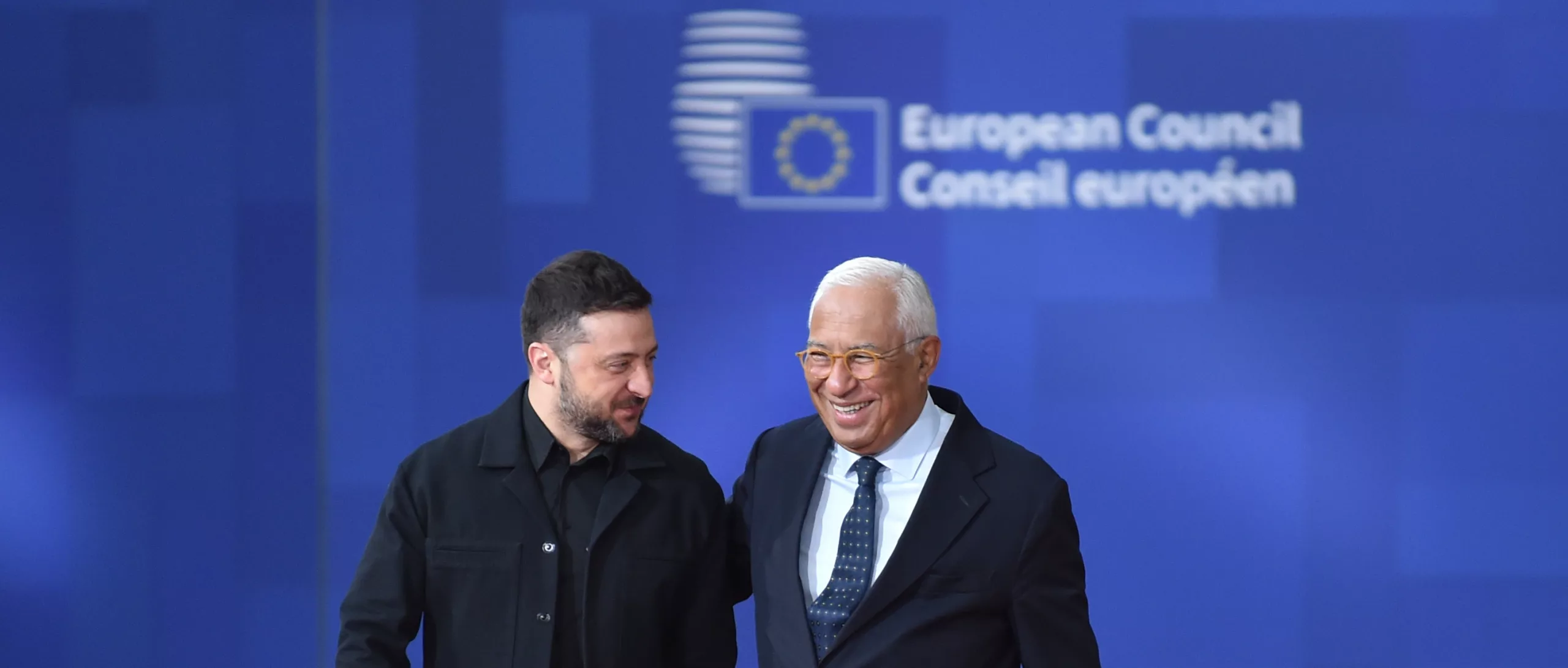
Ireland is supportive of using Russian assets to create a massive reparation loan for Ukraine, the Taoiseach said arriving at an EU summit in Brussels this morning.
EU leaders are expected to ask the European Commission to come up with the legal case for the loan which could be in the range of €140-€160 billion.
The idea is to leverage frozen Russian assets most of which are held in a Belgium.
The Belgium Prime Minister said he was willing to agree to the idea so long as all EU member states including Ireland took their fair share of risk.
A senior EU official said the loan would be divided up according to the GNI of each EU member state.
That means Ireland would be liable for a share of the loan if Russia managed to successfully sue the EU for the money.
Taoiseach Micheál Martin said Russia should be made to pay for invading Ukraine.
“There has to be an economic cost to such flagrant violations of international law”, he said.
President Zelenskyy is also in Brussels for the EU summit. He said the money would be very welcome.
“Thank you for this unity, thank you for this support”, he said this morning.
The money is expected to provide enough money for Ukraine to pay pensions and civil servants and also fund its military for the next two years.
The Taoiseach dismissed suggestions that Ireland’s support for the loan impinged on Irish neutrality.
“I support the European Union initiative. I don’t believe there are implications for neutrality”, said Micheál Martin.
“We are military-neutral, we’re not members of NATO, we’re not members of any military alliance, but countries like Ukraine have a right to defend themselves.”
Once EU leaders have given the go-ahead, the European Commission will have to come up with a legally tight justification for using foreign assets, in this case belonging to Russia.
The European Central Bank has previously warned that touching foreign assets could undermine the Euro’s credibility and weaken confidence in international monetary system.
Separately, EU leaders have agreed to adopt a 19th package of sanctions against Russia.
The latest sanctions will ban imports of Russian LNG and aim to tighten up loopholes in previous sanctions.
The European Commission said:
“A total ban on Russian Liquefied Natural Gas (LNG) and a further clamp-down on the shadow fleet represent the strongest sanctions yet on Russia’s crucial energy sector.
Strong measures also target financial services and infrastructure (including for the first time crypto), as well as trade. The measures also target the services sector and strengthen anti-circumvention tools. With this package, the number of listed vessels in Russia’s shadow fleet reaches a total of 557.”