

Special rules allowing Irish farmers to continue to spread significant amounts of manure may be leading to increased pollution levels and embedding bad habits.
The European Commission has published the results of its first comprehensive evaluation of the Nitrates Directive since its adoption back in 1991.
It found that the law remains “effective to protect Europe’s waters from agricultural nitrate pollution”, but the exception for Ireland may be reducing its effectiveness.
For twenty years, Ireland has had a so-called derogation from the Nitrates Directive. It is now the only EU member state still to get special treatment.
Over time, Irish farmers have been forced to reduce the amount of nitrates – mainly through muck spreading – that they apply on the land. But it is still more than farmers in any other EU country is allowed.
At the end of last year, the Irish government successfully convinced the European Commission that Ireland’s climate conditions – particularly high rainfall – justified the increased use of manure.
But the report today reveals for the first time the results of that decision.
Under the derogation, farmers are allowed to apply up to 220 kg to 250 kg of organic nitrogen per hectare, compared to 170 kg of nitrogen per hectare elsewhere.
In the last reporting period between 2020-2023 (known as Reporting Period 8), levels of nitrates pollution in surface water in Ireland soared to amongst the highest in Europe.
Over the same time period, evidence of eutrophication in surface waters also rocketed.
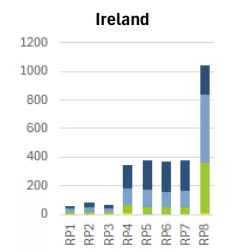
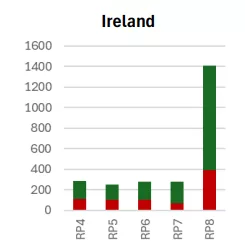
According to experts at the European Commission, the problem is exacerbated when multiple farms in one area are allowed to apply the derogation.
“Experience with the granting of derogations has shown that significant exceedance of the 170 kg/ha limit often results in increased pollution both at the level of water and air,” the European Commission warns.
“Derogation decisions have come with additional conditions, higher scrutiny as well as higher engagement of farmers and authorities. This kept in check the negative impacts of the additional manure allowed, but they have also created expectations and entrenched the derogated farms in high nutrient-output farming that may have led to an accumulation of impacts over time, and thus contributed to the stagnation in water quality improvement [in past decades].”
Responding to the report, Sara Johansson from envrionmental NGO, the European Environmental Bureau (EEB), said:
“National courts and the latest scientific evidence have confirmed the dangers of nitrate pollution from agriculture choking EU rivers and poisoning drinking water. This report confirms that with proper implementation the Nitrates Directive is the most cost-effective way to reverse the damage and provide relief to EU waters.”
The increase in water pollution levels in Ireland is an embarrassment to the European Commission, as well as bad for the environment, since the EU only renewed the derogation at the end of last year.
In its recommendations to the Irish government, the report plays down the seriousness of the situation simply advising that the government should “review and where necessary reinforce measures to improve water quality.”