
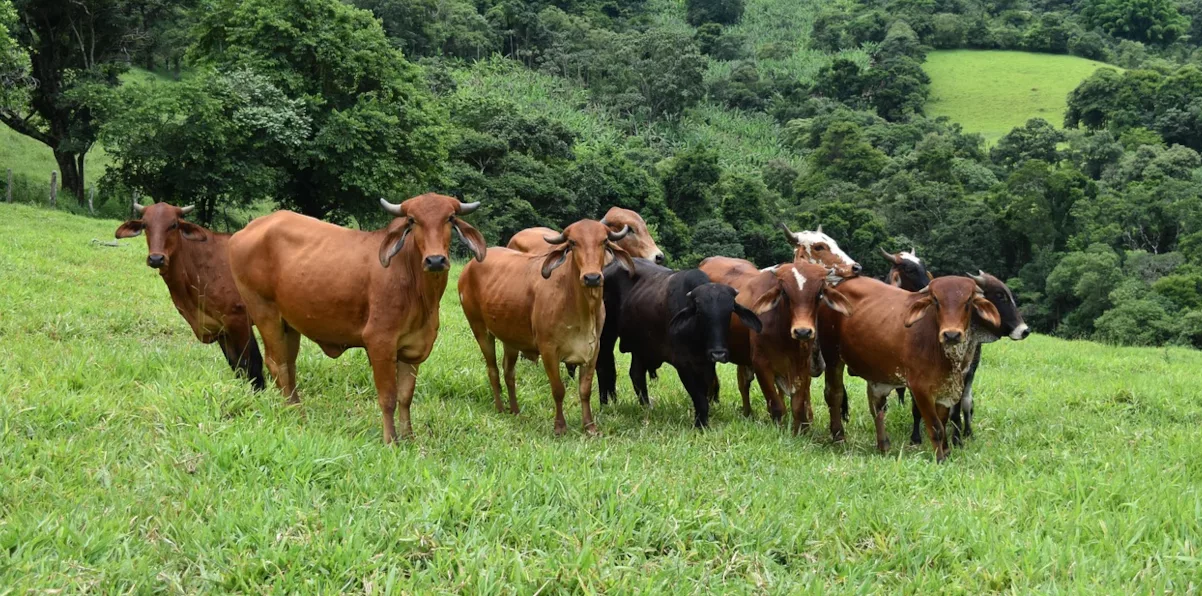
Brazil will not be able to export meat products including beef, chicken, milk and honey to the EU from September due to the use of antibiotics in farming.
“Under EU rules, the use of antimicrobials [such as antibiotics, antivirals, antifungals, and antiparasitics drugs] to promote growth or increase yield in livestock is not allowed”, a spokesperson for the European Commission confirmed.
Concerned by increasing levels of resistance to antibiotics, the EU has placed bans on antimicrobials imports since 2022.
This morning the European Commission published an updated list of countries from which the EU would allow meat products.
Brazil did not make the list.
The EU-Mercosur trade deal, including some preferable tariffs on agricultural products, only came provisionally into force two weeks ago.
The agreement applies to trade between the EU and Argentina, Brazil, Paraguay and Uruguay.
The European Commission has now confirmed that from 3 September, trade with Brazil will be restricted “meaning that it can no longer export to the EU commodities (both food producing live animals and derived products) such as bovine, equine, poultry, eggs, aquaculture, honey and casings [sausage skins].”
“To be included in the list of third countries authorised to export to the Union, Brazil must ensure compliance with the Union requirements on the use of antimicrobials for the entire lifetime of the animals that the exported products originate from”, the EU spokesperson said.
“We have closely engaged with the Brazilian authorities on this issue and will continue contact to work towards their compliance with these requirements. Once compliance is demonstrated, the EU will be able to authorise/resume the exports.”
The ban has been welcomed by the Irish Farmers’ Association (IFA).
“The Commission is finally taking the Antibiotic/Anti-Microbial Resistance (AMR) threat posed by Brazilian beef production somewhat seriously,” said IFA President, Francie Gorman.
He said the ban should remain in place if and until the EU has been able to categorically confirm that Brazilian meat products are safe.
“There can be no fudging of this issue by the Commission; there can be no short cuts taken with an issue this serious for human and animal health,” Francie Gorman said.
“The starting point has to be a comprehensive database of all bovine animals in the country to allow prescribing of antibiotics for farm animals and the infrastructure must then be built around that to incorporate prescribing, dispensing and treatment records similar to what we have in this country.”
The European Commission said it is up to “third countries’ competent authorities and their economic operators to ensure that their food exported to the EU is in line with EU’s food safety requirements.”