
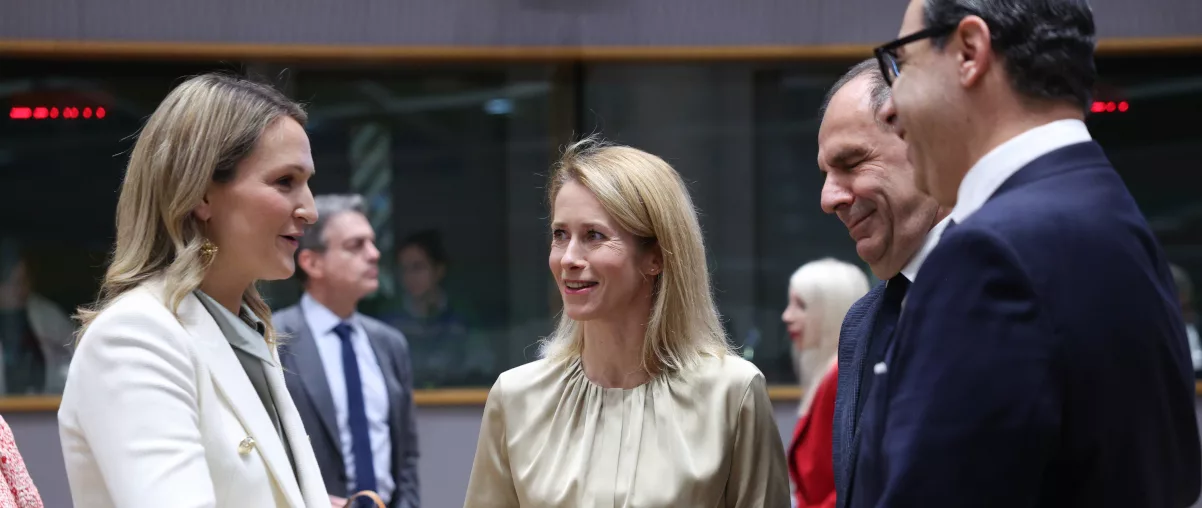
The foreign ministers of Ireland, Slovenia and Spain have demanded EU action in light of Israeli military action in Palestine and Lebanon.
Ireland’s Minister for Foreign Affairs and Trade, Helen McEntee TD, has joined counterparts from Slovenia and Spain in a formal letter to the EU’s High Representative for Foreign Affairs, Kaja Kallas, calling for urgent EU response to measures by the Israeli government that the three ministers say breach human rights and international law.
The foreign ministers — McEntee, Spain’s José Manuel Albares and Slovenia’s Tanja Fajon — say repeated appeals to Israel to reverse executive decisions, military actions and Knesset laws have been ignored.
In the letter, the ministers warn that conditions in Gaza are “unbearable”. They also raise alarm at the deteriorating situation in the West Bank, including escalating violence by settlers and military operations causing civilian deaths.
There is also deep concern about Lebanon where more than 1.2 million people have been displaced by the conflict, according to the UN.
Helen McEntee and her counterparts criticise reported Israeli intentions to occupy southern Lebanon as far as the Litani river. They also criticise Israel’s demolition of civilian homes as violations of international law.
EU foreign ministers are due to discuss their concerns at a meeting in Luxembourg on Tuesday.
Lebanon’s Prime Minister will also attend, it is understood.
Close allies of Israel including Germany and Italy have been more vocal in their concerns about Israeli action in recent weeks, but it is unlikely that the EU will take action this week.
A senior EU diplomat said that the meeting was a chance for a litmus test of where European countries stand, but he did not believe their would be unanimous support to take action – for example suspend the EU-Israeli trade agreement – at this stage.
Sinn Féin MEP, Lynn Boylan, who is also Chair of the European Parliament’s Delegation for relations with Palestine said the European Union should be taking action now.
“Suspending the Association Agreement [the EU-Israel trade agreement] is not a sanction, it is a decision to correctly apply the provisions of that Agreement which clearly predicates the beneficial trading arrangements that Israel enjoys on respect for human rights.
EU leaders must stop pretending that they are dealing with a normal government.
Their leader is wanted by the International Criminal Court and their ministers have championed hanging based on ethnicity.
For Member States such as Germany and Italy, tomorrow’s Foreign Affairs Council represents a test of whether these countries can finally stand up to Israel and uphold the EU’s own agreements.”