
Micheál Martin has rejected the suggestion that his job as Taoiseach could be under threat after last week’s fuel protests.
Blockades of key public transport, fuel depots and ports brought significant disruption across Ireland.
The government was forced to request the support of the Defence Forces to help An Garda Síochána bring the situation under control.
The protests were the result of rising fuel prices caused by the war in Iran.
Despite the US-Iranian ceasefire, very few oil tankers have been able to transit through the Strait of Hormuz and prices at petrol stations remain high.
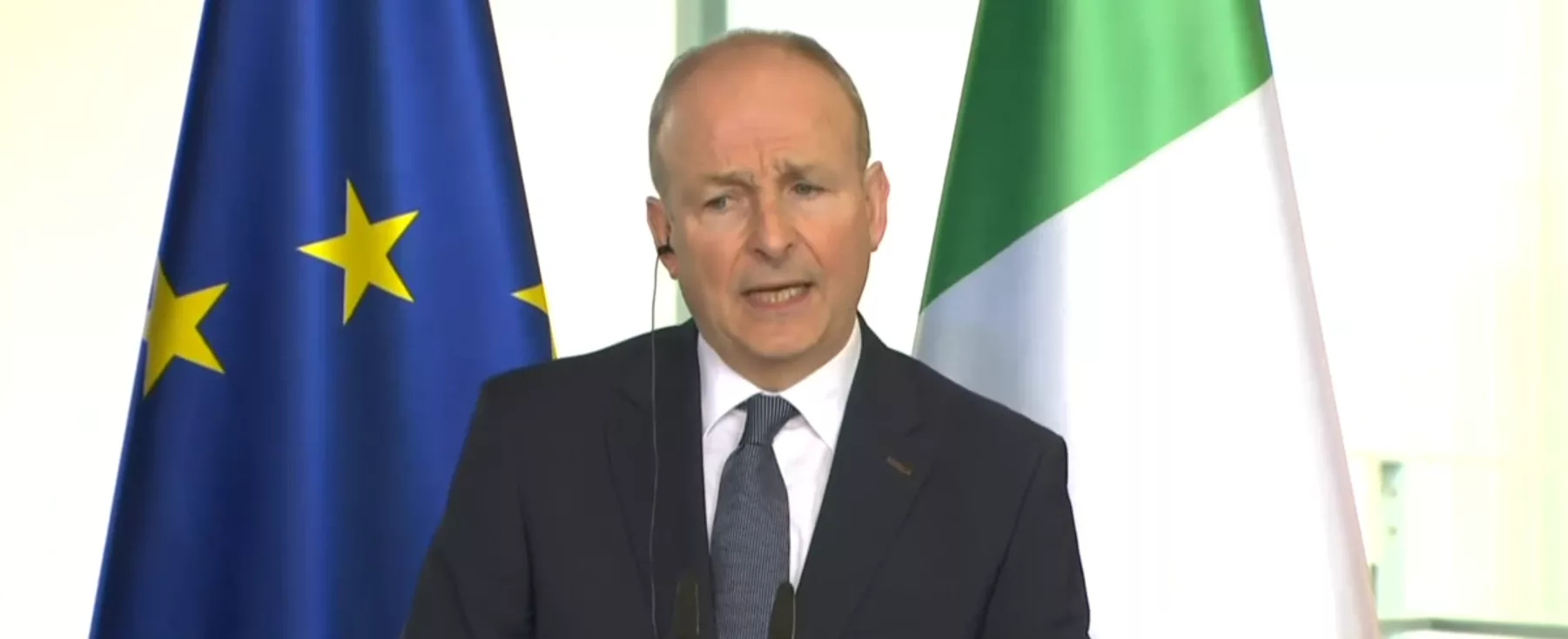
Speaking in Berlin alongside the German Chancellor, Micheál Martin said the speed with which the unrest spiralled caught everyone by surprise.
“No one anticipated the nature and scale of the protests and the blockades”, the Taoiseach said.
“There were many genuine people involved because they are under pressure and we had been in discussions with the representative bodies following our first package in terms of what we could do in a more sustainable basis, particularly in terms of food production and in terms of haulage. And so right across the political system, there would have been real surprise at how this came [about].”
As part of efforts to end the unrest, the government doubled its fuel support schemes for businesses and households to around €500 million.
The Taoiseach said state finances were still in a “relatively resilient position”, but accepted that the war was putting pressure on prices.
There has been criticism of the government’s handling of the crisis, including from some within Fine Gael and Fianna Fáil, but Micheál Martin rejected any hint that he might be forced to resign.
“I do not, in any shape or form, feel under threat in that respect”, he said.
“I do acknowledge the extraordinary pressure…on families and people across the country in terms of the impact of rising oil prices as a result of the war in the Middle East, and government was faced with a very significant dilemma last week in terms of vital critical infrastructure being blockaded.
And we had an obligation to our people and to the state to make sure that those blockades on the oil refinery in the middle of a supply crisis, potentially, that would not stop refining – and we were warned it would – it was on the cusp of ceasing refining.
And in the context of what’s happening around the world, that would have done damage to Ireland.”