
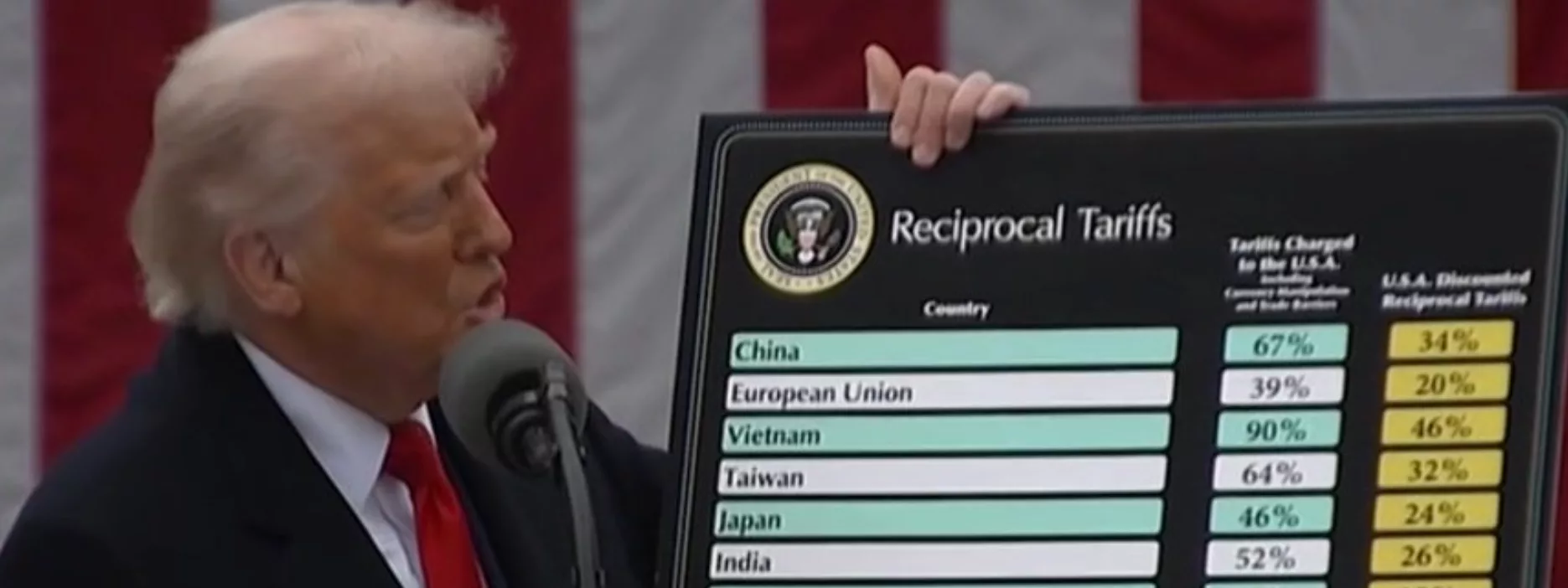
The US Supreme Court has ruled that Donald Trump’s so-called Liberation Day tariffs are illegal.
The ruling impacts tariffs imposed by the US president using a 1970s law – the International Emergency Economic Powers Act (IEEPA) – which allows the president to “regulate international commerce” after declaring a national emergency in response to an extraordinary threat to the United States.
Some of the other US tariffs – notably on steel and aluminium – were imposed on the basis of a different law and are therefore not effected by today’s ruling.
On 2 April last year, Trump announced stratospheric levels of tariffs on most countries around the world.
The EU was threatened with tariffs of 20 percent.
The announcement led to a global panic on the markets and a flurry of diplomatic efforts to try and get the president to change his mind.
The European Union eventually agreed a US tariff of 15 percent for most EU exports.
Today, the Supreme Court ruled that that President Trump cannot legally use emergency powers to invoke reciprocal or country-specific tariffs.
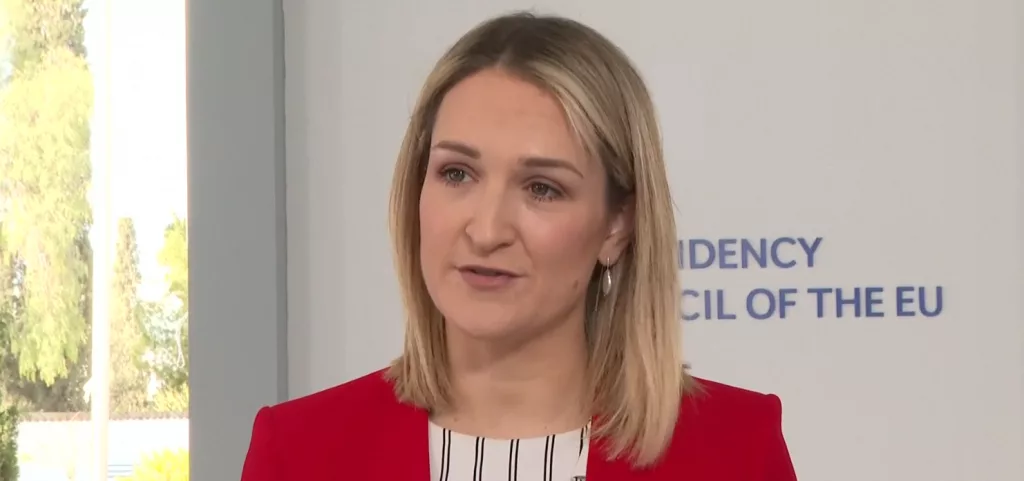
Reacting to the court ruling, Ireland’s Minister of Foreign Affairs, Helen McEntree said:
“I note today’s US Supreme Court ruling on US tariffs. The decision focuses on whether the US Administration may have exceeded presidential authority when it imposed broad import duties under the 1977 International Emergency Economic Powers Act (IEEPA).
While the ruling does not affect tariffs introduced under other legal bases, including Section 232 of the Trade Expansion Act [which was used to apply steel tariffs on the EU], it is a significant development in the wider global trading environment.
Open, stable and predictable trade remains essential for economic growth, investment and jobs in Ireland.
I remain in close contact with the European Commission on this issue. I understand they are engaging directly with the US Administration to seek clarity on how they intend to respond. My Department will continue to monitor developments closely and assess any potential implications for Irish trade, businesses and jobs.”
There are now questions over the US-EU tariff deal as well as the deals the United States struck with other parts of the world.
One possibility is that Trump will find an alternative route to impose the same tariffs. To do so, he may have to seek the support of Congress.
Another less likely option is that he is forced to back down.
There’s also a question over what happens to the billions of dollars in tariffs that the US administration has collected.
According to an analysis by ING Bank, that will ultimately be a decision for the US Court of International Trade.
“Refunds won’t come automatically, as any importer that wants its money back must sue individually. This process has already kicked off, with over 1,000 corporate entities now involved in a legal fight”, ING’s Global Head of Macro, Carsten Brzeski, said.
Reacting to today’s announcement the European Commission’s trade spokesperson, Olaf Gill, said
“We take note of the ruling by the U.S. Supreme Court and are analysing it carefully.
We remain in close contact with the U.S. Administration as we seek clarity on the steps they intend to take in response to this ruling.
Businesses on both sides of the Atlantic depend on stability and predictability in the trading relationship. We therefore continue to advocate for low tariffs and to work towards reducing them.”
The Chair of the European Parliament’s Internal Market Committee, Anna Cavazzini, said:
“It was clear that Trump’s tariffs were illegal under international law. Now we have further confirmation that President Trump should not have imposed these tariffs under American law either.
The consequences of this decision are unclear. There are fears that Trump will continue to overstep his authority until he finds a new legal avenue for his unjustified tariffs. Therefore, I advocate pausing the vote on the Turnberry Agreement [the EU-US tariff deal] in the European Parliament until we have clarity.
Trump’s tariff policy primarily harms businesses and consumers in the USA. Jobs in US industry have been rapidly lost since its implementation.”