
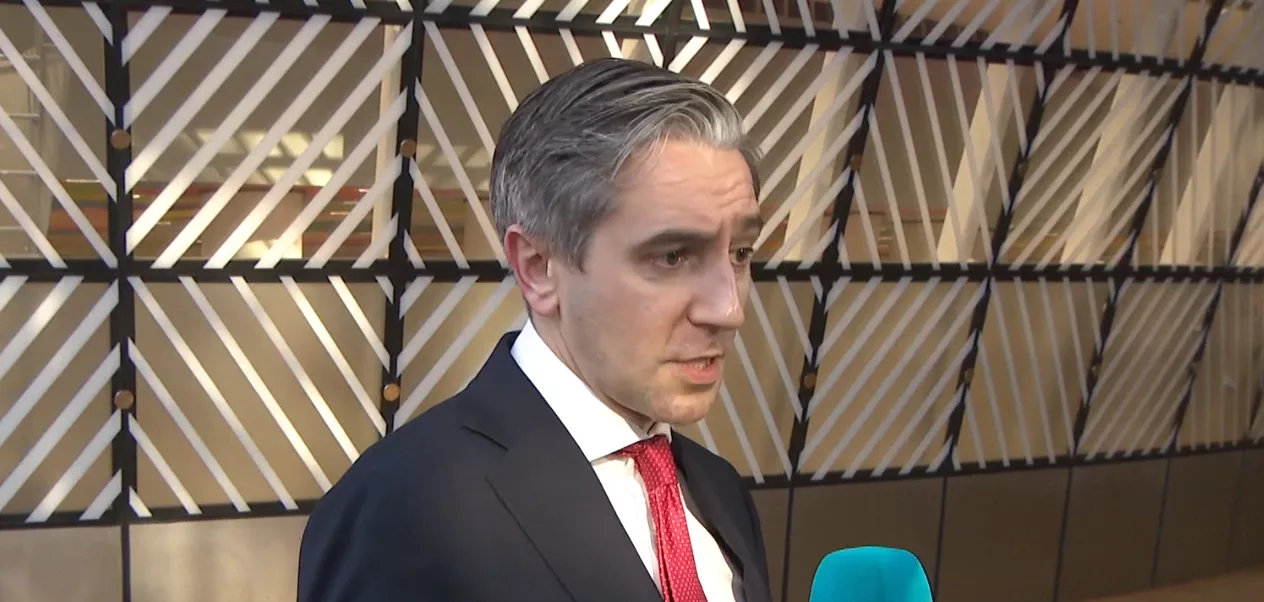
The government is monitoring the fallout out from the war in the Middle East for households in Ireland, Tánaiste Simon Harris TD said this afternoon.
He was speaking in Brussels where finance ministers are meeting to discuss the crisis. It comes as oil prices have been rising as a result of Iran blocking shipping in the Strait of Hormuz.
It is estimated that one-fifth of the world’s oil and LNG usually travels through the straits.
So far, the G7 group of countries has declined to use emergency supplies to ease prices instead only committing to “continue to closely monitor the situation”.
There is concern that rising energy prices will put households in Ireland under strain.
“The Irish government will continue to keep everything under review”, said Simon Harris.
He was careful not to commit to action as events are unfolding very quickly.
“We do need to make sure any actions that are taken are considered or done with eyes wide open”, he said.
“We need to be very careful that the economic medicine that may be administered is the correct prescription.”
Too much government intervention could run the risk of stoking inflation, he added.
“We do need to take this step by step and day by day. I know that’s frustrating for people. I really do, but this is a conflict that is a week old and at the moment it’s hard to predict whether this is something that lasts for a period of days or weeks or indeed something that lasts for months and there’s a very very different economic impact and perhaps therefore a very different economic response required depending on which of those scenarios materialises.”
It was also a reminder of the need to diversify Ireland’s and Europe’s energy supplies.
“What’s happening in the Gulf is a stark reminder of the competitiveness challenge that Europe faces by being dependent on other parts of the world uh for energy.
Now Ireland is obviously actively participating through the Celtic interconnector, our first connection to the European electricity grid and that’s welcome.
We should look for more opportunities to invest in more infrastructure like that. I think that’s crucial in the time ahead and Ireland is very eager to have further conversations about potential for future interconnectors.”