
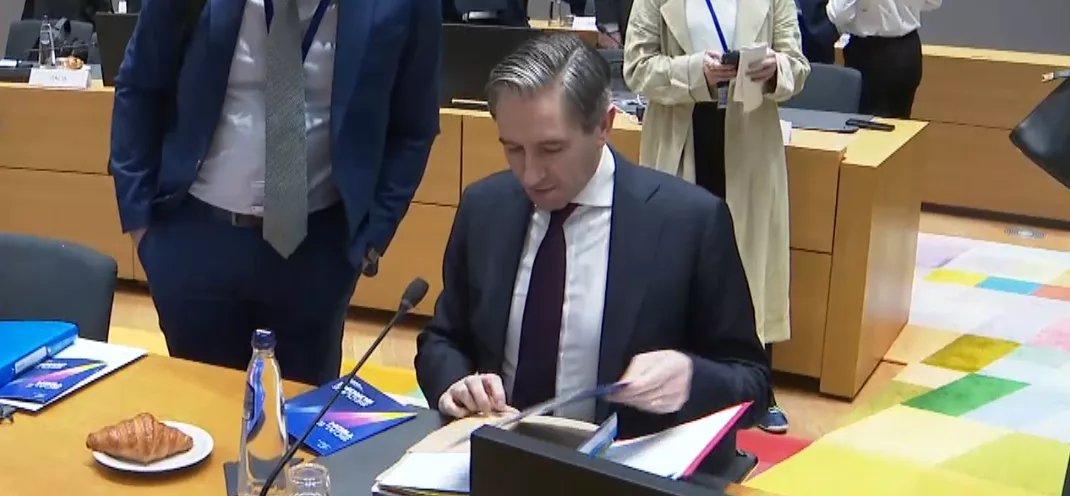
The EU finance ministers have signed off on a new spending roadmap for Ireland.
Under the new plan, the EU has set a “maximum net expenditure path for Ireland” meaning the Irish government will face a spending cap between now and 2030.
The cap is designed to encourage levels of investment in public services and economic reforms whilst keeping the country’s finances stable.
The plan, as agreed with the Irish government, sets out spending goals including:
- Infrastructure and Housing: Significant investment to meet the needs of a growing population and tackle housing shortages.
- Climate and Energy: Actions to speed up the “green transition,” such as building electric vehicle charging points and developing offshore wind energy.
- Financial Safety Net: Continued use of two national savings funds – the Future Ireland Fund and the Infrastructure, Climate and Nature Fund – to protect the economy against future downturns.
- Public Service Reforms: Improvements to healthcare, disability services, and childcare to make them more effective and accessible.
“This Plan, developed alongside Minister for Public Expenditure, Infrastructure, Public Services, Reform and Digitalisation Jack Chambers and adopted by the Irish Government, sets out a clear and credible fiscal path for Ireland within the EU framework and is grounded in three pillars: sustainability, resilience, and readiness”, said Tánaiste and Minister for Finance Simon Harris TD.
Under the agreement, there is a strict cap on how much the government is allowed to increase its spending each year.
The total amount the government spends, known as the “maximum growth rate” will be set at:
2026: 6.6 percent
2027: 6.0 percent
2028: 7.6 percent
2029: 6.7 percent
2030: 6.4 percent
Ireland must also ensure that its annual budget deficit – the gap between what it spends and what it earns – does not exceed 3 percent of GDP.
It must also keep its total national debt at what the EU considers a safe level of below 60% of GDP.
Ireland’s debt is currently projected to stay well below this, reaching about 23.7 percent by 2039.
“In a world of real economic uncertainty, from global trade pressures to geopolitical instability, Ireland has a clear multi-annual framework within which we can plan, invest in housing and infrastructure while reforming public services we rely on and delivering a tax system that works for working people”, said Simon Harris.
“I would like to thank the Commission for their support in the preparation of the Plan and for their assessment.
“We are the first Member State to submit a revised Plan and, overall, reflecting on our experience, this has proven to be a very useful and important tool for us.
“The new Plan provides fiscal and policy certainty in a very uncertain world and sets out a framework within which responses to these challenges can take shape. I welcome the endorsement of the Plan today.”
The Council of the European Union said the plans for each member state are “a cornerstone of the EU’s new economic governance framework, containing member states’ fiscal trajectory, together with envisaged reforms and investments.”