
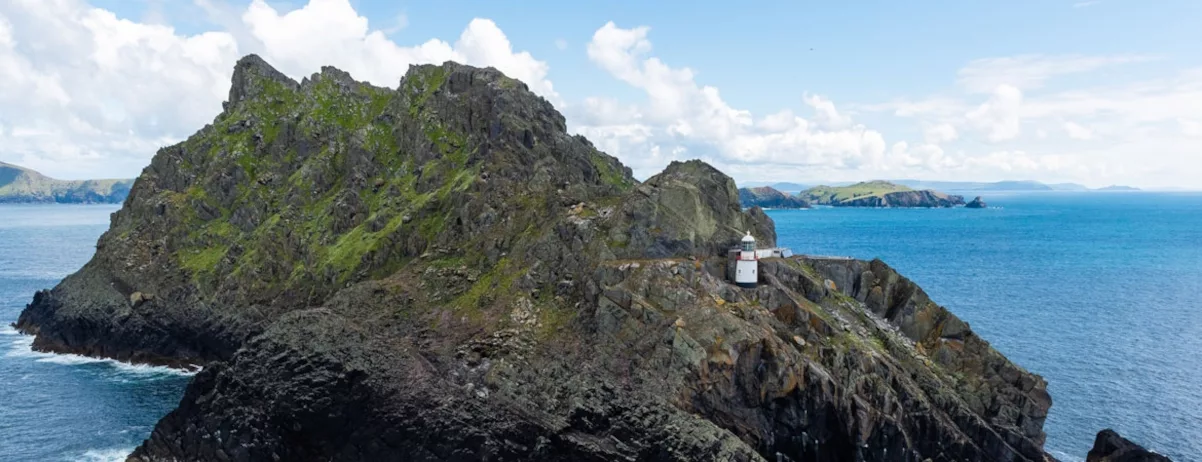
A new project will study environmental change on six of Ireland’s remote and uninhabited islands, Irish Lights has announced.
The LIGHTHOUSE project (“Leveraging Island LiGhthouses and Harnessing Technology to examine Heritage Opportunities in Unique offShore Environments”) will run for four years and is being funded by the Environmental Protection Agency (EPA).
Its objective is to improve knowledge about island biodiversity, climate, habitat and ecosystems and to monitor the impact of the withdrawal from surplus lighthouse infrastructure, Irish Lights said.
The maritime organisation owns all six islands. The project will explore “how lighthouse infrastructure can support positive national sustainability and biodiversity goals”.
The EPA’s Director of the Office of Evidence and Assessment at the EPA, Roni Hawe, said it was an important opportunity to monitor our changing climate.
“Ireland’s ecosystems are facing significant pressures, from climate change, pollution and other environmental factors. Offshore islands are among our most fragile ecosystems, and the EPA-funded LIGHTHOUSE project will provide the scientific foundation needed to protect biodiversity, understand environmental change and guide sustainable decision‑making for years to come.”
LIGHTHOUSE is a collaborative project involving Mary Immaculate College, Queen’s University Belfast, University College Dublin, the National Parks and Wildlife Service and Irish Lights.
“Irish Lights has a long and continuous history of stewardship on these offshore islands”, said Irish Lights’ CEO, Yvonne Shields O’Connor.
“As we responsibly withdraw from surplus infrastructure, such as former dwellings and stores buildings, it is important to note that the Aids to Navigation on these sites will remain fully operational.
These assets including lighthouse towers are essential for the safety of navigation at sea, the core mission of Irish Lights.
The LIGHTHOUSE research project aligns strongly with our sustainability commitments and will help shape best practice for managing our offshore estate and navigation assets in a way that supports positive biodiversity outcomes.”
The LIGHTHOUSE project will examine how historic buildings and other structures can be “transitioned into nature‑positive spaces”.
The EPA hope that the project will help meet Ireland’s commitment to protect 30 percent of its marine environment by 2030.
The six islands subject to the study are Bull Rock, Inishtrahull, Inishtearaght, Mew Island, Rockabill and Slyne Head.
According to environmentalists, these islands host globally important seabird populations and provide natural observatories ideal for detecting environmental change.