
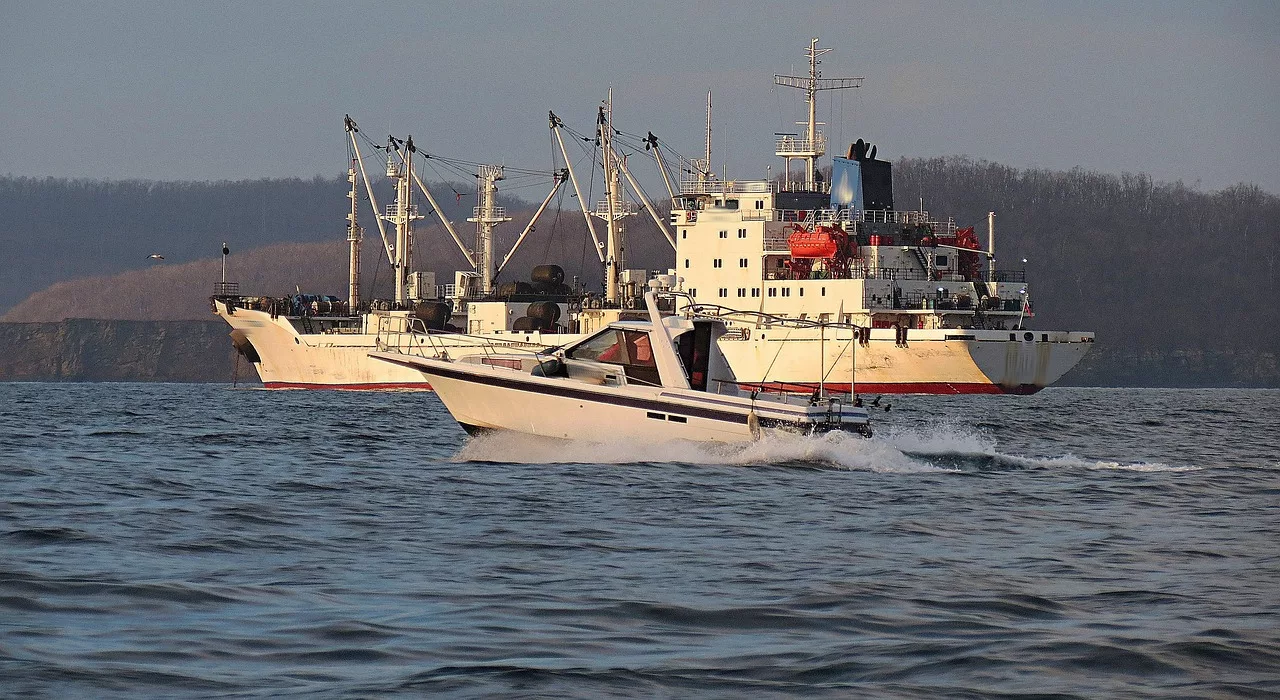
The European Commission has proposed a complete ban on imports of Russian cod.
It would be the first time Russian fisheries products would face sanctions, if the proposals are approved by EU member states.
“We are addressing one of the last major unsanctioned sectors: fisheries. We propose substantial restrictions on imports on some fish products, and a complete ban on others, including cod.
And we will be aligning trade restrictions for Belarus. So it cannot serve as a backdoor for Russian trade.” European Commission President, Ursula von der Leyen, said in a video address at lunchtime.
According to The Fishing Daily, Russia has been exporting more and more fish to the European Union since the start of the war in Ukraine.
Last year, the EU imported more than 200,000 tonnes of Russian fish products, worth €1.3 billion, the newspaper reported back in February.
With Russian fish products banned, there could be new opportunities for the Irish fishing sector.
Von der Leyen said it was continuing to sanction new sectors because “we want to lock in Europe’s diversification away from Russian imports.”
She also announced plans for new export restrictions on high tech equipment used by Russia’s military industry.
European industry will not be able to export more targeted “metals and alloys used in the aerospace and defence sectors.”
It is thought that this does not cover alumina which continues to be exported from Ireland to Russia.
Yesterday the Ukrainian Foreign Minister, Andrii Sybiha, wrote on social media:
“No aluminium for the Russian war machine. Recent investigations into alumina exports raise serious concerns about European-produced materials entering supply chains linked to Russia’s military-industrial complex.
Aluminium is a critical component in the production of Russian missiles, drones, military aircraft, and other weapons used daily against Ukraine and its people. We welcome the Irish authorities’ decision to launch an official investigation and expect it to be conducted swiftly, independently, and transparently.
European production and supply chains must not contribute, directly or indirectly, to sustaining Russia’s war machine. Instead, Russia must be deprived of access to any and all critical resources and materials.
Earlier EU restrictions on cellulose and chrome have made a real difference. Now is the time to apply the same approach to alumina. Ukraine will continue working with Ireland, EU institutions, and international partners to strengthen sanctions pressure on Moscow and close gaps that enable Russia’s defence industry to operate.”
The Taoiseach has meanwhile committed to speak to the European Commission about alumina as soon as the government’s investigation into the matter has been concluded.
“As soon as we have completed our work, through the Department of Enterprise, Trade and Employment, we’ll engage with the [European] Commission,” Mícheál Martin promised on a visit to Cork.
The department was renamed the Department of Enterprise, Tourism and Employment in 2025.
Aside from fisheries, the European Commission wants to ban imports of certain metals, metal ores and car parts worth around €60 million to the Russian economy.