
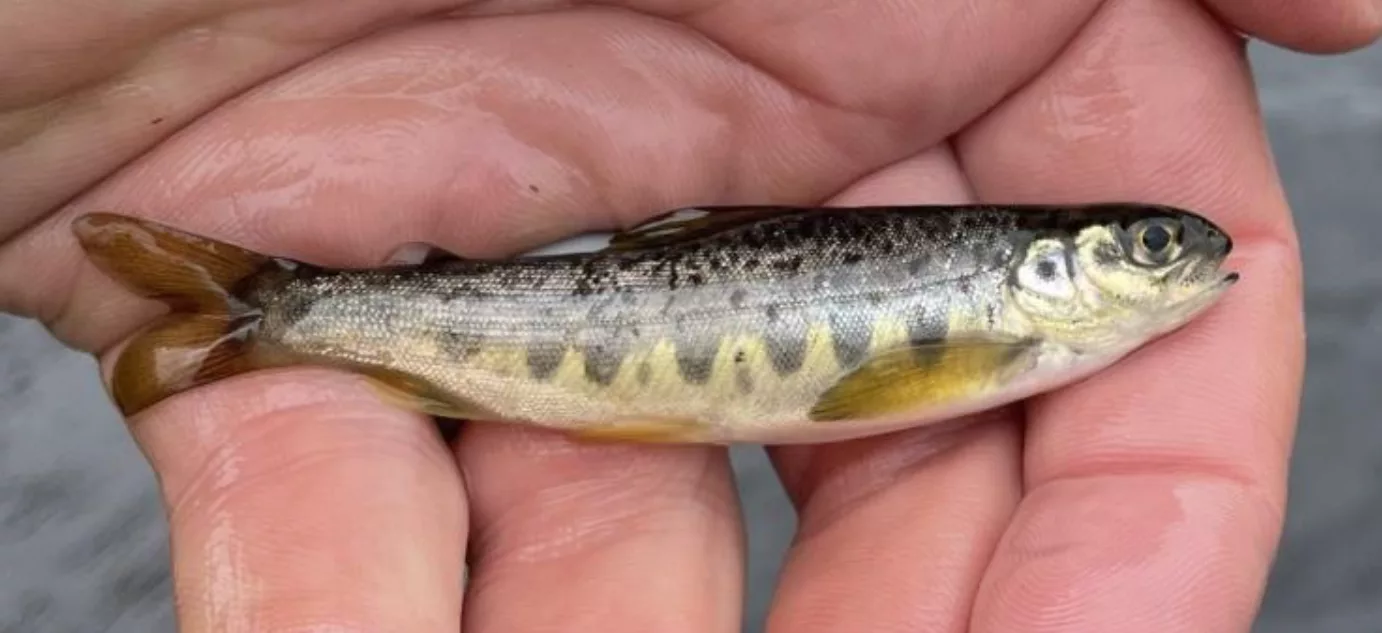
Farmed salmon genes can be found in one third of wild Atlantic salmon populations around Ireland, according to a new study.
Rivers affected by “genetic introgression” – genes that have been passed from farmed salmon to wild salmon – were found “throughout the country,” researchers found.
In one third of the wild Atlantic salmon populations analysed, there was evidence of farmed salmon genes.
“Escaped farmed salmon pose a risk to the continued sustainability of our wild Atlantic salmon, which are already vulnerable to a wide range of other pressures,” said Dr Michael Millane from the Inland Fisheries Ireland (IFI).
“When farmed salmon interbreed with our wild salmon, they dilute the unique genetic integrity that adapts wild populations to their river of origin.
“This genetic disruption can ultimately lower off-spring survival rates and reduce the overall resilience of wild populations to other pressures that impact them.”
But in many cases, the amount of farmed salmon escaping and successfully breeding with the wild population seems to be very small. Evidence of farmed salmon genes was “low” in most of the samples taken.
In total, 82 (66.7 percent) of wild Atlantic salmon populations were categorised as Green (no evidence of impact), 33 (26.8 percent) were classified as Yellow (low impact), 7 (5.7 percent) as Orange (moderate impact), and 1 (0.8 percent) classified as Red (high impact), the study found.
The IFI collected samples of salmon in rivers from 133 locations across Ireland between 2023 and 2025. Samples collected between 2003 and 2008 from 61 rivers were also used in the study.
The IFI collaborated with Ireland’s food authority, Teagasc, and researchers from University College Cork to put together the report.
According to the IFI, “elevated levels” in wild Atlantic salmon were discovered in marine stocks close to marine salmon farms and near freshwater salmon farms.
In Norway, two thirds of wild salmon sampled have shown signs of farmed salmon genes, twice as high as in Ireland. The amount of genetic material found in those samples was generally much higher.
But researchers warn against direct comparisons.
“The Norwegian genetic baseline was based on the analysis of historical scale collections, principally from adult fish, acquired before the development of salmon farming in Norway. The Irish baseline was constructed, in contrast, using contemporaneously collected juvenile samples,” the report says.
Dr Fiona Kelly, Head of Research, Policy and Risk at IFI said the data analsysed in Ireland opens the way for future research.
“The report findings provide a valuable baseline for future such assessments and will guide further research into the implications for wild Atlantic salmon populations,” she said.
“The findings are also useful to better inform the regulation of the salmon farming sector in Ireland.”
The IFI is the state agency responsible for conserving, protecting and managing fish, including wild Atlantic salmon populations, in Ireland.