
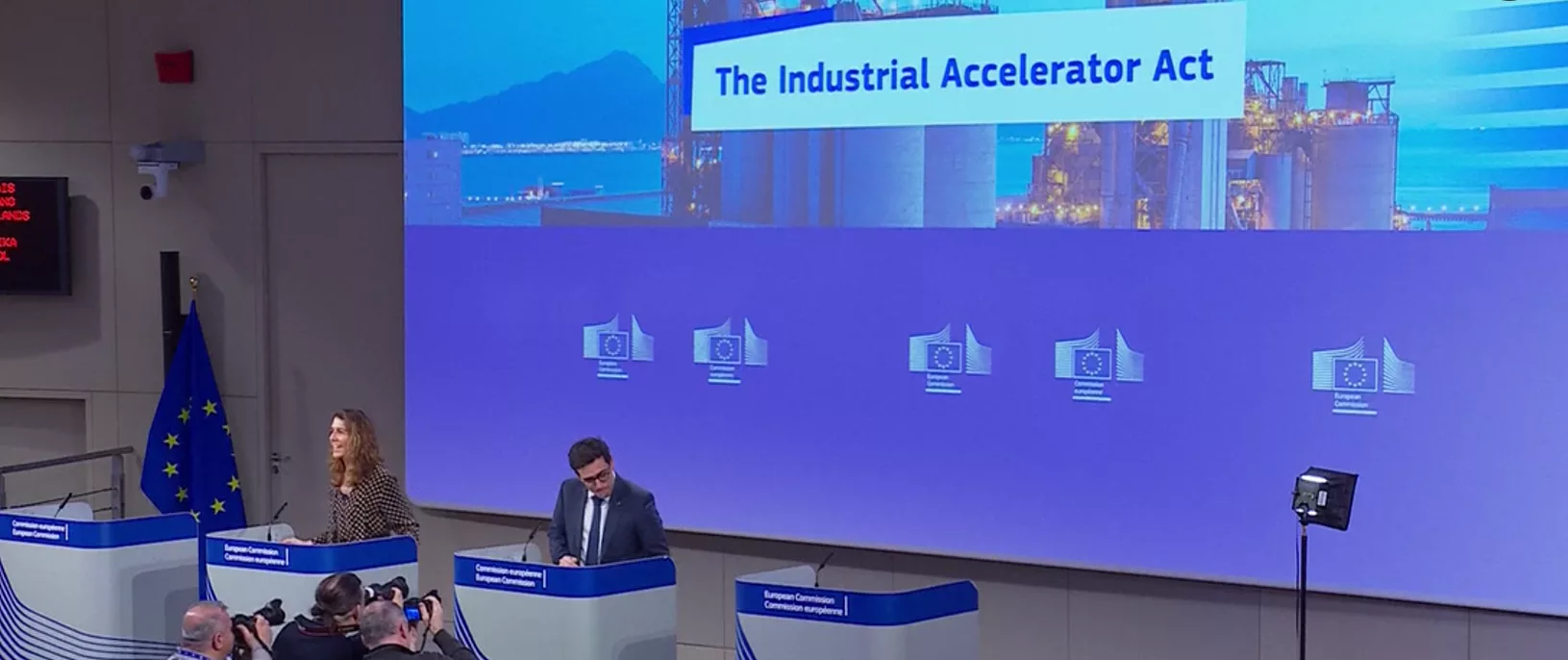
European products will get priority under a new ‘Made in EU’ policy put forward by the European Commission.
The proposed Industrial Accelerator Act aims to “strengthen industry and create jobs in Europe”, the European Commission says.
The Irish government has reservations about the idea which it sees as disruptive to free trade.
“We need to be very careful about ‘European preference’ and it’s one that could set the EU back”, Irish Trade Minister, Peter Burke TD, warned last week.
I “absolutely understand there’s some areas that are very much strategically important for the direction of Europe, but we just have to be careful and that will be Ireland’s message very firmly at our EU colleagues.”
The European Commission says the Industrial Accelerator Act will bolster the European Union’s manufacturing competitiveness and economic security.
The proposal aims to reverse industrial decline with the aim of the EU regaining one-fifth of manufacturing GDP by 2035.
The “Made in Europe” provision will apply to “strategic sectors” including batteries, cars and net-zero technologies.
Special conditions will apply to batteries, solar panels and electric vehicles from outside the EU with investors required to promise EU jobs and EU-shareholders.
Public procurement of steel, cement, aluminium should prioritise EU production, the European Commission says.
It is a radical solution designed to try to stop the flow of jobs and technology out of the European Union, but it is controversial.
Countries like Germany and Ireland worry that it could lead to protectionism.
“Facing unprecedented global uncertainty and unfair competition, European industry can count on the provisions of this Act to boost demand and guarantee resilient supply chains in strategic sectors”, insisted Stéphane Séjourné, European Commissioner for Prosperity and Industrial Strategy.
“It will create jobs by directing taxpayers’ money to European production, decreasing our dependencies and enhancing our economic security and sovereignty.”
The proposals will face scrutiny by the European Parliament and by EU trade ministers before becoming law.