
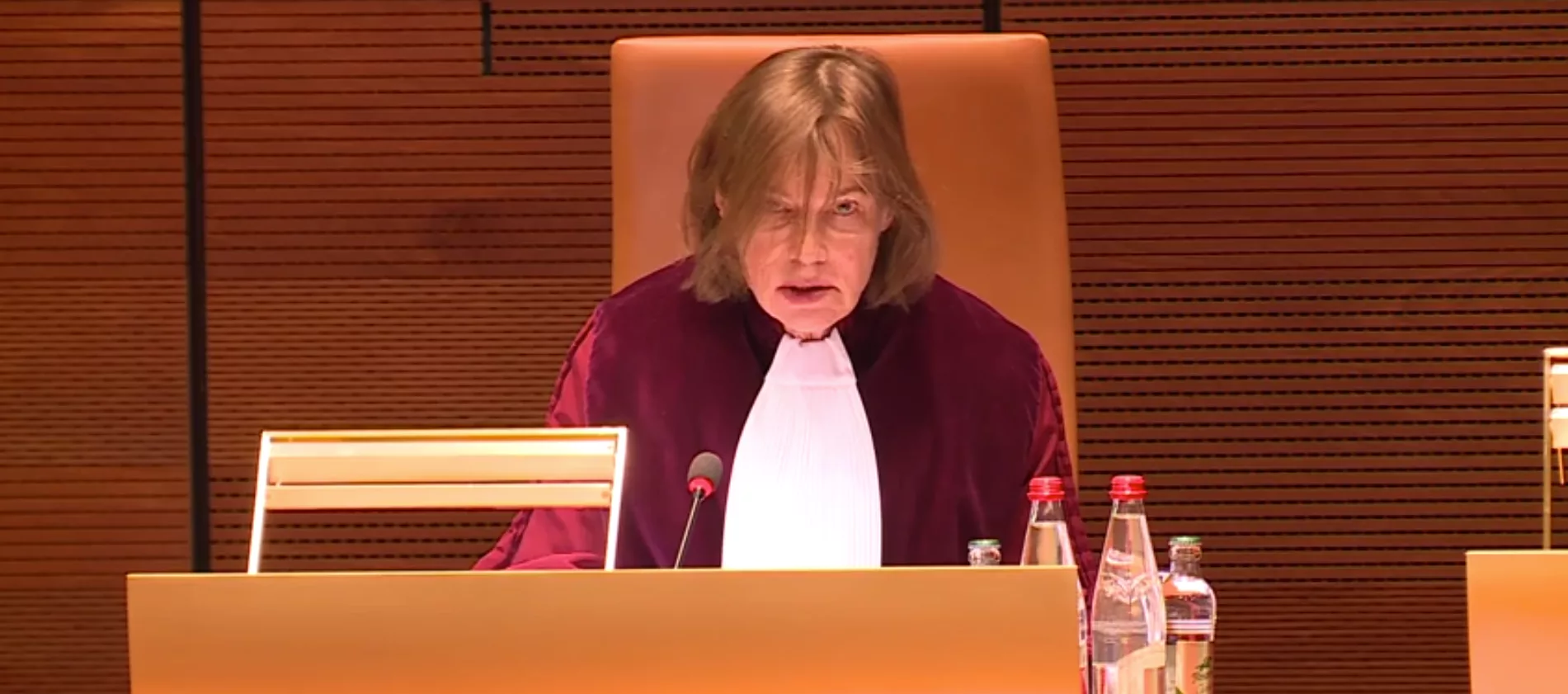
A top legal advisor to the European Union’s highest court says that Ireland has failed to protect its unique bog habitats from the peat cutting in contravention of EU law.
In an Opinion delivered today, Advocate General, Juliane Kokott, advises judges at the European Court of Justice to find Ireland has “manifestly and significantly” failed to meet its obligations under the EU’s Habitats Directive.
A Critical Milestone, Not the Final Word
While today’s findings are a major setback for the government, this is not the final judgment. The Advocate General’s role is to provide an independent, non-binding legal opinion to the court on how it should rule.
In the majority of cases, EU judges subsequently agree with Advocate General opinions, but not always.
“Ireland has failed to take adequate steps within the meaning of Article 6(2) of Directive 92/43/EEC on the conservation of natural habitats and of wild fauna and flora in order to prevent the deterioration of raised bog habitats (Natura 2000 Codes 7110 and 7120) and of blanket bog habitats (Natura 2000: Code 7130) resulting from activities related to peat cutting in the Natura 2000 sites designated for the protection of those habitat types,” she concludes.
The European Commission brought a case against Ireland to court following years of investigations and back and forth “communications” with Irish authorities that failed to resolve their concerns.
The European Commission argues that Ireland has failed to take “adequate steps” to prevent the deterioration of protected raised and blanket bogs. Peat cutting was still being recorded as recently as 2023, according to court documents.
The Advocate General says that Ireland is obligated to restore habitats damaged by peat cutting going as far back as 1995. This includes dozens of sites across the country.
Only one site, Carrownagappul Bog in Galway, has received adequate restoration, she said.
In its defence, the government argued that peat cutting has ceased in 73 percent of Special Areas of Conservation selected for raised bog habitats.
Over the past twenty years, the number of plots cut has been reduced by four-fifths, the government added.
“The fact that a small number of persons continue to engage in illegal peat cutting in a few sites, despite the efforts of the Irish authorities, is not a sufficient basis to conclude that the measures are inadequate,” government laywers argued.
But the Advocate General hit back that Ireland’s efforts were “not sufficient to comply fully with the prohibition of deterioration laid down in Article 6(2) of the Habitats Directive.”
Irish Bogs “deteriorating”
The Advocate General also raised concerns for the future of Irish blanket bogs, many of which remain in a “unfavourable, bad and deteriorating” condition, according to a report by the National Parks and Wildlife Service.
Restoration should not be seen as compensation for losses elsewhere, she added.
The European Court is likely to reach a final judgment by the end of the year.